
Teeth are sensitive if they often hurt when they are exposed to cold or to air. You may also feel discomfort or a sudden flash of pain when eating sweet, acidic, or hot foods. The pain you feel may be due to receding gums, worn tooth enamel, or worn root surfaces. Healthy teeth are protected by strong enamel and good gums.

How Teeth Become Sensitive
When enamel erodes or gums recede, dentin can be exposed. Dentin is the layer of the tooth that is normally covered by the enamel and gums. The most common cause of sensitive teeth is exposed dentin. Dentin is connected to the nerve that triggers pain in sensitive teeth.
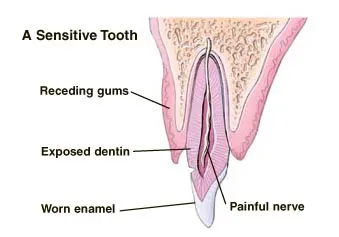
If You Have Sensitive Teeth
See your dentist if you have sensitive, painful teeth. Your dentist will examine your teeth, determine the cause of your tooth sensitivity, and recommend a proper treatment plan.
Although teeth grinding (bruxism) may happen at any time, people often grind their teeth in their sleep. You may not even know you’re doing it. The causes are not clear. Stress is one possible cause, but often the reason for the habit is not known.

Damage Caused by Teeth Grinding
Teeth grinding may cause:
If it goes untreated, bruxism may lead to jaw muscle and joint problems and even loss of your teeth.
Evaluating the Problem
Your dentist will examine your entire mouth and ask several questions. This evaluation helps confirm that you do grind your teeth. It may also help identify a possible cause of your teeth-grinding habit.
The Symptoms of Grinding
Symptoms like these may be a signal that you grind your teeth:
Possible Treatments
Your dentist may suggest one or more of these treatments:
Injury to the teeth or mouth can happen due to an accident or sports injury. Dental trauma may not always seem serious. But even minor injuries can cause infection or other problems. The key to saving your smile is getting help right away.

When to Go to the Emergency Room (ER)
Speed is crucial when it comes to most tooth trauma. The faster you’re treated, the better the chances your tooth or teeth can be saved. Go to your dentist or the ER at once if:
What to Expect in the ER
Your injury will be examined. If you’ve lost a tooth, a dentist may be able to replant it. For the best results, this is done within an hour after your injury. In some cases, a broken tooth can also be repaired. Cuts and abrasions may be treated with cold packs and dressings.
Follow-up
Once you’re home, call your dentist right away if you:
Steps to Saving a Permanent Tooth
If a permanent tooth is knocked out:
Do you have pain in your face, jaw, or teeth? Do you have trouble chewing? Does your jaw make clicking or popping noises? These symptoms can be caused by temporomandibular disorders (TMD). This term describes a group of problems related to the temporomandibular joint (TMJ) and nearby muscles. Your symptoms may be painful and frustrating. But don’t worry. Your healthcare team can help you treat TMD and prevent future problems.
What’s Wrong?

TMD causes many kinds of symptoms. That’s part of the reason it can be hard to diagnose. You may have headaches, tooth pain, or muscle aches. Your pain may be constant. Or it may come and go without any apparent reason. TMD-related problems include:
What Can You Do?
If you are having TMD symptoms, don’t wait. Call your dentist or primary care doctor right away. You don’t have to live with pain or discomfort. TMD can be treated. In fact, a key part of treatment is learning to manage your condition at home.
Which Treatment Is Right for You?
Treatment helps rest the muscles and joint. It also helps relieve symptoms and restore function. Depending on the type of problem you have, your treatment plan may include:
How Can You Avoid Future Problems?
Treatment can help relieve your current condition. But TMD symptoms may return over time. You can avoid future problems by maintaining the health of your jaw:
Plaque is a sticky coating of bacteria and other substances that forms on your teeth and gums. It can cause two serious problems: tooth decay and gum disease. These problems damage the teeth and gums, and may even lead to tooth loss. When the mouth is well cared for, tooth decay and gum disease can be reversed in their early stages. Better yet, you can prevent these problems from starting by brushing and flossing daily.

How Tooth Decay Develops
Tooth decay happens when acid eats away at a tooth. Cavities (also called caries) are holes that form in the teeth. They are most common in places that are hard to reach with a toothbrush. This includes the grooves at the tops of the teeth, and on the sides where the teeth touch. In late stages, tooth decay can be painful. It can also lead to tooth loss.
Treating Tooth Decay
Tooth decay can be treated to keep it from moving farther into the tooth. This is often done by filling cavities. First, any tooth decay is removed. This protects the tooth from further damage. Then, the cavity is filled with a hard material. This filling protects the damaged tooth and restores the tooth surface. If the tooth is severely damaged by decay, other treatments are available.
Follow-up Visits
Visit your dental team at least every 6 months for a checkup and cleaning. If you’re being treated for tooth decay or gum disease, you may need more frequent visits. These visits will likely decrease as your mouth care efforts start to pay off. Keep flossing and brushing, and follow any special instructions your dentist or dental hygienist gives you. And enjoy flashing your healthy smile!
Wisdom teeth that cannot fully break through the gum (erupt) are called impacted. These teeth can grow in almost any direction, including:

Problems Caused by Impacted Teeth
Impacted wisdom teeth can cause acute (sudden) problems, chronic (ongoing) problems, or no problems at all. Removing the teeth before symptoms develop can prevent or reduce future complications. Dental x-rays can help your dentist find existing problems. X-rays may also help show whether your wisdom teeth are likely to cause problems in the future. But it’s not always clear whether your wisdom teeth will give you trouble. Potential problems include:
A jaw that’s too small, too large, or crooked can cause problems with chewing, speaking, breathing, and even sleeping. The shape of your jaws also affects the way your face looks. This sheet helps you understand how the teeth and jaws work. It also describes common jaw problems that may need treatment.
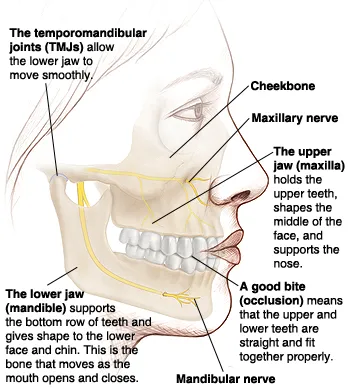
How Bones and Teeth Shape the Face
Bones are the framework for the face. The size and position of facial bones determine how well the teeth fit together. Together, the positions of the jaws and teeth affect chewing, speaking, and the working of the jaw joint. The jaws also hold and support soft tissues, such as the muscles, lips, and tongue. And of course the jaws and teeth are factors in the face’s shape and appearance.
How the Jaws Work
The lower jaw holds the tongue, which moves freely as you speak and eat. The upper jaw shapes the floor of the nasal cavity, allowing normal airflow. Normally, muscles are evenly developed on both sides of the face.
Common Problems
Some common jaw alignment problems are described below. It’s also common to have a combination of these problems.
When Jaws Are Not Aligned
Poorly aligned jaws can result in a variety of problems, including: